
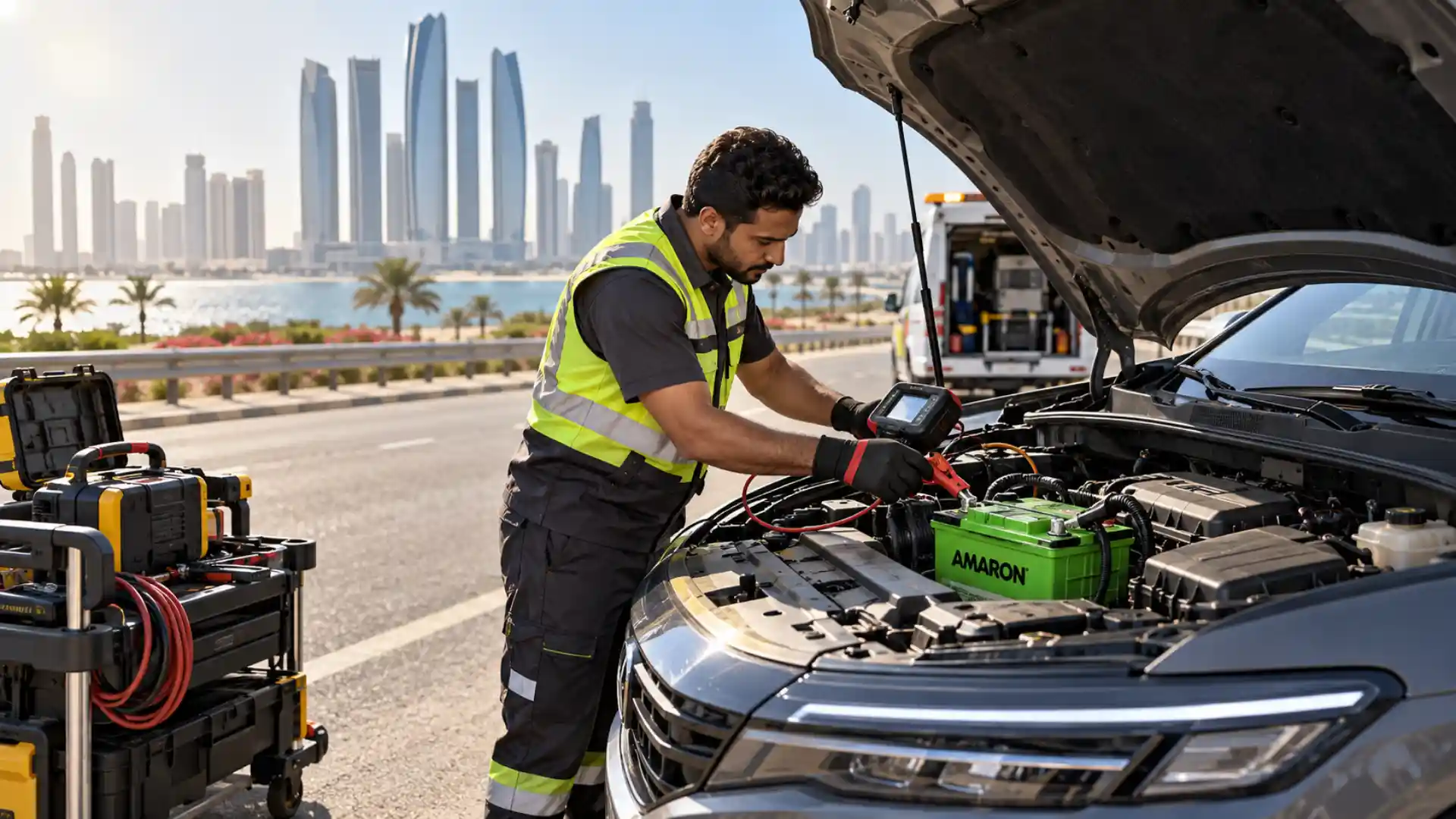
A dead car battery can stop your day without warning. It may happen in a parking area, outside your home, or on a busy road when you need to reach somewhere quickly. Amaron Battery roadside assistance in Abu Dhabi helps drivers deal with battery problems without needing to tow the car to a workshop.
The service usually starts when you call for help and share your location and car details. A technician comes to your location to check the battery, charging system, and starting problem. If the battery has failed, the technician can replace it with a suitable Amaron battery at the location.
What Is Amaron Battery Roadside Assistance?
Amaron battery roadside support is a mobile service for drivers who face battery-related problems while using their cars. Instead of taking the car to a workshop, a trained technician comes to the vehicle with testing equipment, tools, and suitable battery options.
The technician first checks whether the problem is caused by a weak battery, loose connection, starter, or alternator.
A jump-start may solve a temporary problem, while a battery replacement may be needed when the battery cannot hold enough charge. This makes mobile battery service useful for drivers who need help at home, work, or on the road.
Why Do Car Batteries Fail Without Warning?
Car batteries can become weak for several reasons, and some problems may not show clear signs until the engine fails to start. Abu Dhabi’s hot climate can place extra stress on a battery because high temperatures can speed up battery wear and water loss.
Short trips may also prevent the alternator from fully charging the battery. Other causes include lights being left on, parasitic electrical drain, loose battery terminals, and an old battery reaching the end of its service life. Knowing these causes can help drivers understand why a battery that worked yesterday may not start the car today.
How Amaron Battery Roadside Assistance Works
Getting roadside help is usually a simple process. The technician needs basic information about the car and its location before travelling to the vehicle. Once at the site, the battery and related starting parts are checked to find the real cause of the issue.
If the battery is only discharged, a jump-start may be enough to get the engine running. If testing shows that the battery has reached the end of its useful life, a replacement can be carried out at the same location. The main steps are explained below.
Step 1: Contact Roadside Battery Support
The first step is to contact a mobile battery service and explain what happened. Give the technician the car’s location, make, model, engine type, and the problem you noticed. For example, you can mention if the dashboard lights work but the engine does not crank, or if there is no electrical power at all.
This information helps the technician prepare the right tools and battery size. If possible, share the battery model or a photo of the battery label. Correct details can reduce delays and help the technician bring a suitable replacement.
Step 2: Technician Reaches Your Location
After receiving the service request, a mobile technician travels to the vehicle. Roadside battery support can be useful because the car does not need to be driven to a garage when it cannot start.
The technician may reach a home, office parking area, shopping area, or roadside location, depending on where the car has stopped. Before starting any work, the technician should confirm the car details and inspect the battery area.
Safety is important, especially when the vehicle is stopped near moving traffic. The car should remain in a safe position with the parking brake applied.
Step 3: Battery and Electrical System Testing
A proper battery check should go beyond simply looking at the battery. The technician can use a battery tester to measure voltage and starting performance. A healthy, fully charged 12-volt battery will normally show around 12.6 volts when the engine is off, although the exact reading can vary.
The technician may also check the alternator output while the engine is running. A charging voltage around 13.8 to 14.4 volts is commonly expected in many vehicles, but vehicle specifications can differ. Terminal condition, cable connections, and signs of corrosion should be checked as well.
Step 4: Find the Real Cause of the Problem
A weak battery is not always the main reason a car will not start. A technician should check other possible causes before fitting a new battery. A faulty alternator may fail to recharge the battery, while a starter motor problem can cause slow or failed engine cranking.
Electrical accessories can create a parasitic drain when the car is switched off. Loose terminals can also reduce current flow between the battery and the car. Finding the cause matters because installing a new battery will not solve an alternator fault or a major electrical problem.
Step 5: Jump-Start the Car if the Battery Can Recover
If testing shows that the battery is discharged but still in usable condition, the technician may perform a jump-start. This gives the starter enough electrical power to crank the engine. The correct connection order and suitable equipment are important because incorrect jump-starting can damage electrical components.
Once the engine starts, the charging system should be checked to make sure the alternator is working. Drivers should not assume that a successful jump-start means the battery is healthy. If the battery quickly loses charge again, further testing may be needed to identify the cause.
Step 6: Replace the Battery When Required
If the battery fails a proper test, replacement is usually the practical solution. The technician should select a battery that matches the car’s required specifications, including physical size, terminal layout, capacity, and starting power.
An Amaron battery may be available in different sizes and specifications for different cars. The old battery is disconnected safely before the replacement is installed and secured. Terminals should be clean and tight after installation.
Some modern cars may need battery registration or reset procedures after replacement, so the technician should check the vehicle’s requirements before completing the job.
Step 7: Test the New Battery and Charging System
Battery installation should not be the final step. After fitting the new unit, the technician should start the engine and check the charging system. The battery terminals should be inspected to make sure there is a firm connection and no movement. The technician may check voltage again and confirm that the alternator is charging the battery correctly.
Electrical accessories can then be tested if needed. This final check helps make sure the starting problem has been fixed. It can also reveal another fault that may reduce the life of the new battery.
What Information Does the Technician Need?
Providing the right information when requesting roadside assistance can make the service faster. The technician normally needs the car’s location and basic vehicle details. It is useful to provide the make, model, year, engine type, and battery information if available.
Tell the technician whether the engine is cranking slowly, clicking, or not responding at all. You should mention if the battery warning light appeared while driving. For start-stop systems, hybrid cars, and cars with special battery systems, sharing this information is even more important because the correct battery type and fitting method may differ.
What Is Checked During an Amaron Battery Replacement?
A good battery replacement involves more than removing the old unit and connecting a new one. The technician should compare the replacement battery with the car’s required specifications. Important points include battery group size, voltage, capacity measured in amp-hours, and cold cranking amps.
Battery terminals and cables should be checked for corrosion or damage. The battery tray should hold the unit firmly so it does not move while driving. On some cars, battery management systems may need a reset or registration. These checks help the new battery work correctly and reduce the risk of another starting problem.
When Should You Call for Battery Roadside Help?
You do not always need to wait until the car completely stops working. Early warning signs can show that the battery is becoming weak. Slow engine cranking, dim lights, repeated clicking sounds, and difficulty starting after the car has been parked for several hours can point to a battery or charging issue.
If the battery is more than a few years old, testing is a good idea, especially before long trips. A roadside battery technician can check the battery before a complete failure. Early testing may help prevent an unexpected breakdown at an unsafe or inconvenient location.
Amaron Battery Warranty and Replacement Support
Battery warranty terms depend on the exact Amaron model and seller, so drivers should check the warranty linked to the battery they purchase. Some Amaron batteries come with warranty periods that can vary by model and may include replacement or pro-rata support.
Keep the purchase details and warranty information after installation. Proper installation also matters because battery damage caused by an incorrect electrical system may not be treated the same as normal battery failure. If a battery develops a problem during its warranty period, the service provider can test it and confirm whether it meets the warranty conditions.
How to Reduce the Chance of Battery Failure
Simple habits can help a car battery last longer. Drivers should avoid leaving headlights, cabin lights, chargers, or entertainment systems running when the engine is off. Battery terminals should stay clean and tight because corrosion can affect current flow.
If a car is used mainly for very short trips, the battery may not receive enough charging time. Regular battery testing can help find a weak battery before it fails.
Drivers should also pay attention to the alternator and charging system. A healthy charging system is important because even a new battery can become weak if it is not charged correctly.
Why Mobile Battery Replacement Is Useful in Abu Dhabi
Mobile battery replacement saves drivers from arranging a tow when the main problem is a failed battery. This is especially useful when a car is parked at home, outside an office, or in a public parking area.
A technician can bring testing equipment and a replacement battery directly to the vehicle. The service also reduces the need to drive a car with a suspected charging or battery problem.
For drivers who use their cars every day, having access to roadside battery support provides a practical way to deal with unexpected starting problems without making a separate trip to a workshop.
Key Points to Remember About Battery Roadside Assistance
A battery problem can have several causes, so proper testing should come before replacement. Roadside assistance starts with sharing the vehicle location and problem details, followed by battery and charging-system checks.
A jump-start may help when the battery is discharged but still usable. A failed battery may need an on-site replacement with the correct specification.
Drivers should keep warranty details after buying a new battery and should not ignore signs such as slow cranking or repeated starting trouble. Regular testing, clean terminals, and a healthy alternator can help reduce unexpected battery failures.
Get an Amaron Battery in Abu Dhabi
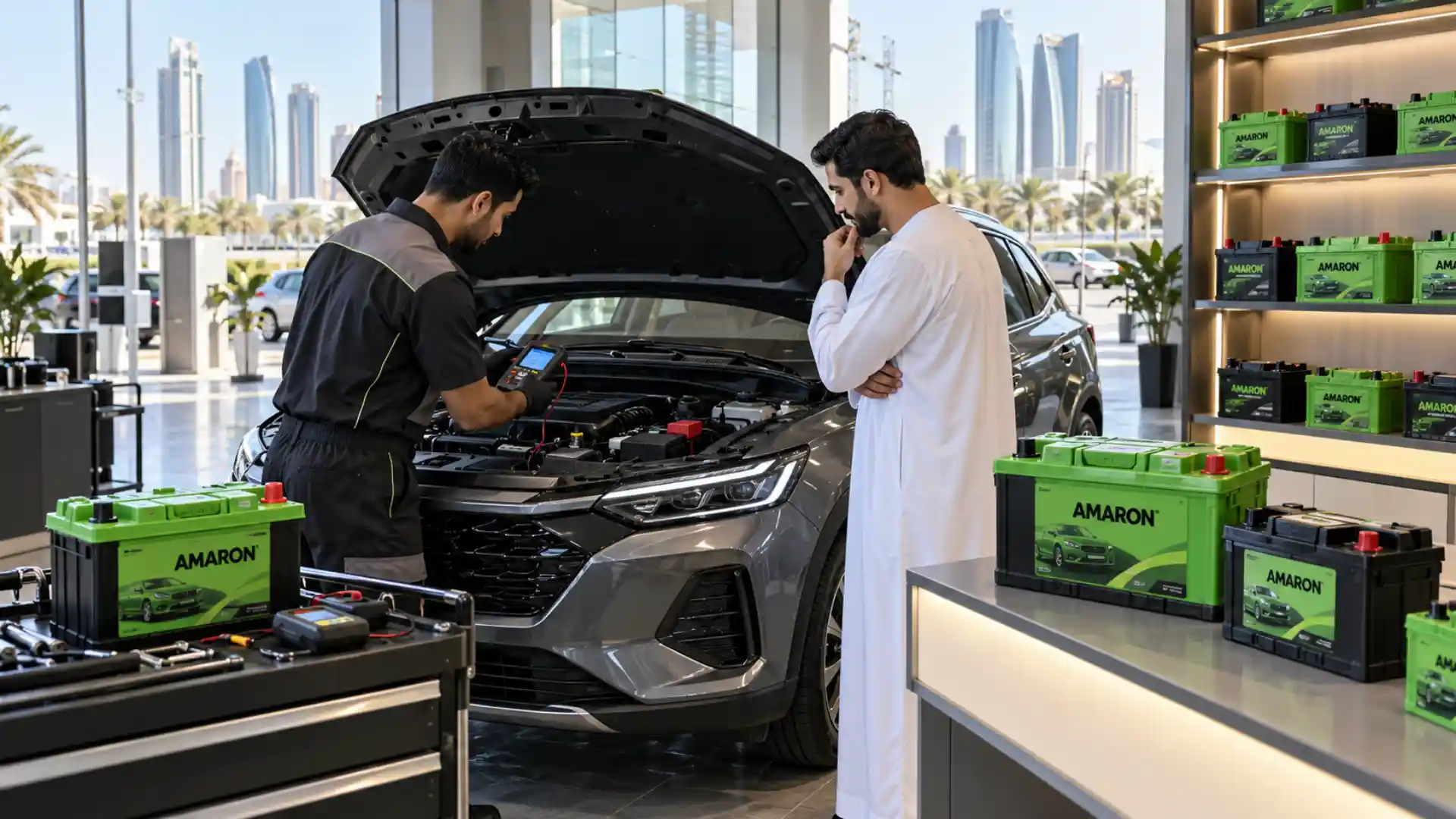
When your car needs a new battery, choosing the correct size and specification is just as important as choosing the battery brand. 800 Car Battery Replacement Abu Dhabi provides Amaron battery replacement services for drivers who need a battery fitted at their location.
The service can help with battery testing, replacement, and starting problems, making it easier to get back on the road without taking the car to a workshop.
If your current battery is weak, old, or no longer holding a charge, contact 800 Car Battery Replacement Abu Dhabi to purchase an Amaron battery and arrange professional battery replacement service at your location.

-abu-dhabi.webp&w=1920&q=75&dpl=dpl_Grou1KsFTFbWzZZwT61WXmiT7M2v)